Find Reliable Toyotas Under 10k - Best Used Picks
Hunting for a dependable Toyota under $10,000?
With patient searching, smart filters, and a careful inspection, you can still score a reliable, inexpensive Toyota that will run for years.What $10,000 Buys You in Toyota Land
At this budget, expect cars that are roughly 8–18 years old with 110k–220k miles, honest wear, and a few cosmetic flaws. You’ll find many more choices than in the sub-$5k market—especially older sedans and hatchbacks—with some crossovers and minivans slipping under $10k at higher mileages.
Private-party sales often stretch your dollars further than dealer lots (fewer fees and fluff). Plan an immediate maintenance fund of $600–$1,500 for tires, fluids, brake work, and overdue services—this small investment can turn a good cheap Toyota into a great one.
Cast a wider net than just your city. Search suburban and rural listings, expand your radius to 150–300 miles, and be ready to travel for the right car—you can often save hundreds to thousands by avoiding hot urban markets.
Best Toyota Models to Target Under $10k
Toyota Corolla (2009–2016, higher miles)
Why it’s great: Legendary reliability, simple maintenance, and excellent fuel economy. Late 10th-gen (’09–’13) and early 11th-gen (’14–’16) cars frequently appear under $10k with higher mileage.
What to watch: Listen for suspension clunks (struts/control arms), check for oil consumption, and verify basic maintenance (plugs, coils, fluids). In snow-belt states, rust around rear wheel arches and underbody can be a deal-breaker.
Toyota Camry (2007–2014, higher miles)
Why it’s great: Comfortable, quiet, and ubiquitous—parts are cheap and plentiful. The 2.4L/2.5L four-cylinder trims are the budget sweet spot for longevity and fuel economy.
What to watch: On older 2.4L engines, ask about oil consumption and timing chain tensioner leaks. Ensure smooth automatic shifts and look for tired engine mounts or worn suspension.
Toyota Yaris (2012–2018)
Why it’s great: Simple, durable, and economical. Often overlooked, so pricing stays friendly. Manual transmissions are especially robust.
What to watch: Cosmetic wear on budget examples, noisy wheel bearings, and deferred maintenance (tires/brakes). If it’s clean and tracks straight, it’s a home-run commuter.
Toyota Prius (2010–2015 Gen 3) and Prius c (2012–2017)
Why it’s great: Outstanding fuel economy and taxi-proven durability. Many Gen 3 Prius and Prius c hatchbacks can be found under $10k with service records.
What to watch: Hybrid battery health is key. Look for even charge bars and no hybrid warnings. Gen 3 Prius can suffer from EGR clogging and head-gasket issues at high miles—prior EGR service is a plus. Battery replacement ranges roughly $800–$2,000 depending on refurbished vs. new. Check official mileage ratings on fueleconomy.gov.
Toyota Matrix / Pontiac Vibe (2009–2013)
Why it’s great: Corolla drivetrain in a practical hatchback. AWD variants exist, and cargo room is excellent for the class.
What to watch: Same engine/trans checks as Corolla. Inspect the rear hatch area for leaks and rust, and verify AWD engages smoothly if equipped.
Toyota RAV4 (2006–2012) and Sienna (2011–2014, high miles)
Why they’re great: Practical family choices that dip under $10k at higher mileage. A well-kept RAV4 or Sienna still makes a dependable daily.
What to watch: On older RAV4s, listen for rear differential whine and ensure the automatic shifts cleanly. On Sienna, sliding door mechanisms and struts are common wear items. Rust on older SUVs/minivans often decides the deal—inspect thoroughly.
Toyota Avalon (2005–2012)
Why it’s great: A quieter, roomier Camry with long-distance comfort and understated value. Often less trendy, so pricing can be friendlier.
What to watch: V6 timing belt history on earlier models, strut replacement costs, and age-related rubber components. Confirm maintenance history through the Toyota Owners portal if records are available.
Scion xB (2008–2015) / xD (2008–2014)
Why they’re great: Scion is Toyota underneath. Simple, economical, and often under the radar. The boxy xB offers great space; the xD feels newer on a budget.
What to watch: Aftermarket modifications; prefer stock or lightly modified examples. Verify maintenance and avoid rust.
Highlander (2004–2008, early 2009–2010 high miles)
Why it’s great: Family-friendly crossover with Camry-like reliability. Four-cylinder trims are simpler and often cheaper to maintain.
What to watch: Listen for suspension clunks, check for AWD coupling noises, and inspect thoroughly for rust on older examples.
What about trucks?
Tacoma/Tundra under $10k usually means late-’90s to mid-2000s models with very high miles, rust, or accident history. Frame corrosion is a known issue—inspect rails and crossmembers carefully and run the VIN on Toyota’s recall page and the NHTSA VIN lookup. Clean, base 2WD trucks sometimes surface near $10k—expect competition and act fast.
Where to Find Deals and How to Search
- Private-party listings: Start with Facebook Marketplace, Craigslist, OfferUp, and an aggregator like AutoTempest.
- Widen your radius: Rural and suburban areas can be hundreds or even thousands cheaper than big cities.
- Use smart filters: Search terms like “single owner,” “maintenance records,” and “commuter.” Set max price to ~$10,500 to catch negotiable listings.
- Set alerts: New listings go fast. Enable notifications and be the first to message with a clear, polite template.
- Timing helps: End of month, weekdays, and bad-weather days often bring more motivated sellers and fewer competing buyers.
Message template you can copy: “Hi! I’m very interested in your Toyota. If it’s available, could I come today with cash for a quick, straightforward purchase? Do you have maintenance records, and are there any warning lights or issues I should know about?”
Pre-Purchase Inspection Checklist (Toyota-Specific)
- Rust first: Check rocker panels, rear wheel arches, subframes, and suspension mounting points. Rust ends more Toyotas than engines do.
- Fluids and leaks: Engine oil level and color, coolant (no oil sheen), and transmission fluid condition. Wetness around valve or timing covers = gasket work ahead.
- OBD-II scan: Bring a cheap Bluetooth reader and scan for codes. Learn the basics of OBD‑II. If codes appear, price out likely fixes (e.g., O2 sensors vs. catalytic converter).
- Engine behavior: Smooth cold start, steady idle, no knocking or rattling. On 2.4L/2.5L engines, confirm no misfire under load and no excessive oil use.
- Transmission: Smooth, consistent upshifts/downshifts; no flares or harsh engagement. Manuals should engage cleanly without clutch chatter.
- Suspension and brakes: Clunks over bumps suggest struts or control arms. Pulsation under braking indicates warped rotors.
- Hybrid specifics (Prius/Prius c): Even battery state-of-charge display, no hybrid warnings, engine doesn’t run constantly at idle, and the rear battery fan isn’t roaring.
- Service history: Prefer documented oil changes and big-ticket items (struts, alternator, water pump). Timing belts on older V6s need date/mileage proof; most 4‑cyl Toyotas use chains.
- Safety and recalls: Confirm airbag light test (on at key-on, off after start). Check the VIN on Toyota’s recall site and NHTSA.
- Title status: Clean title and matching VINs on dash, door jamb, and windshield. Salvage or flood history requires a significant discount and extra caution.
Budgeting Beyond the Purchase Price
- Immediate maintenance: $400–$1,200 for fluids, filters, spark plugs, wipers, and a thorough baseline service (especially if records are thin).
- Tires and brakes: $500–$1,000 depending on size and quality. Don’t skimp—these are safety-critical.
- Insurance and fees: Registration, taxes, and inspection can add several hundred dollars. Get quotes ahead of time.
- Deferred repairs: Budget for struts, control arms, wheel bearings, or a 12V battery. For hybrids, a high-voltage battery plan of $800–$2,000 is prudent unless you have proof of a recent replacement.
Create a simple spreadsheet with purchase price, transport, title/registration, insurance, and a 90-day repair fund. A $9,000 car with $1,000 of smart maintenance often beats a $9,900 car with nothing left for fixes.
Bay Minette, AL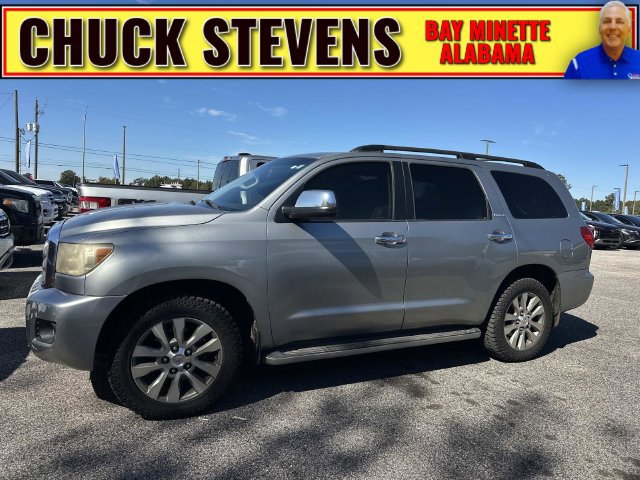 Used
Used
 Used
Used
2008 Toyota Tundra 2WD Truck for sale in Bay Minette, AL
 Used
Used
 Used
Used
 Used
Used
 Used
Used
Negotiation and Closing Tips
- Know the comps: Bring 3–5 similar listings to justify your offer. Data beats haggling.
- Lead with value: “I can come today, cash in hand, and not waste your time.” Convenience is worth money to private sellers.
- Inspect respectfully: Point out needed maintenance factually, not emotionally. Turn fixes into a fair discount.
- Walk-away power: If it’s rusty, has warning lights, or the story doesn’t add up, leave. The next listing is better than a bad car.
- Paperwork: Match the seller’s ID to the title, confirm lien release if applicable, and get a signed bill of sale with price, VIN, and date.
Quick Case Study: Turning $10k into a Solid Toyota
Jordan wanted a reliable commuter and set a $10,000 cap. After two weeks of saved searches within 200 miles, they found a 2014 Toyota Corolla LE for $9,200 with 162k miles and full records. A pre-purchase inspection flagged worn front struts and tires at 4/32”. Jordan negotiated to $8,700, then invested $880 in mid-grade tires and alignment, plus $260 in fluids and filters. Out the door for $9,840, the Corolla returned 33–35 mpg (per fueleconomy.gov estimates) and sailed through state inspection—a textbook win for a used Toyota under $10,000.